

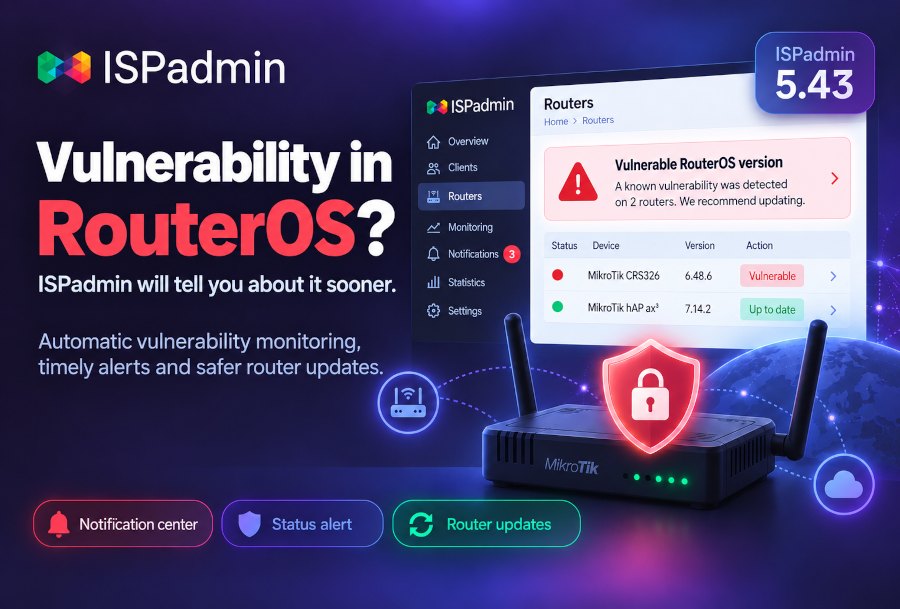
A security hole in RouterOS is rarely a problem for lack of a fix. It is usually a problem because you hear about it late – and then you still have to work out which routers on your network it actually affects. ISPadmin 5.43 shortens both of those steps.
Alerts right in the Notification center
A new RouterOS vulnerability alert has been added to the system. Where relevant, the information also appears among the system notifications in the Notification center – in other words, where you are already looking. No need to watch third-party mailing lists or compare version numbers by hand.
A status alert that stays until the problem is gone
Alerts now offer a new Status alert setting. If an alert is defined as a status alert, it stays in the relevant Dashboard widget until its conditions no longer apply. No more alerts that flash by at night, leave no trace by morning, and let the problem keep running.
Routers now also show a graphical indication of how each notification type is configured – so you can see at a glance where the monitoring is missing.
Updates now come in two modes
Bulk actions now split the update into two different things that used to be hidden behind a single button:
- Update RouterOS to the latest stable in the branch – security patches without jumping to another branch
- Upgrade to a higher RouterOS version – when a higher version is what you actually want
The difference is practical: you can patch quickly and across the board without pushing a bigger change into your network than you planned. And when you want to check a specific router by hand, the MikroTik router overview now takes you straight into WinBox.
One more thing about logging in
For individual users with 2FA enabled, you can now allow devices to be remembered and set how long that lasts. Two-factor authentication can stay on even where technicians used to switch it off because of repeated code entry.
Why this matters now
The Czech Cybersecurity Act (NIS2) is in force and NÚKIB keeps flagging organizations that have not yet registered. A defensible record of which versions run on your network and how quickly you respond to known vulnerabilities is not extra paperwork – it is exactly what someone will ask to see.
The full list of changes in version 5.43 is in the changelog.